
Sponsored Agents in ChatGPT: What Advertisers Need to Know
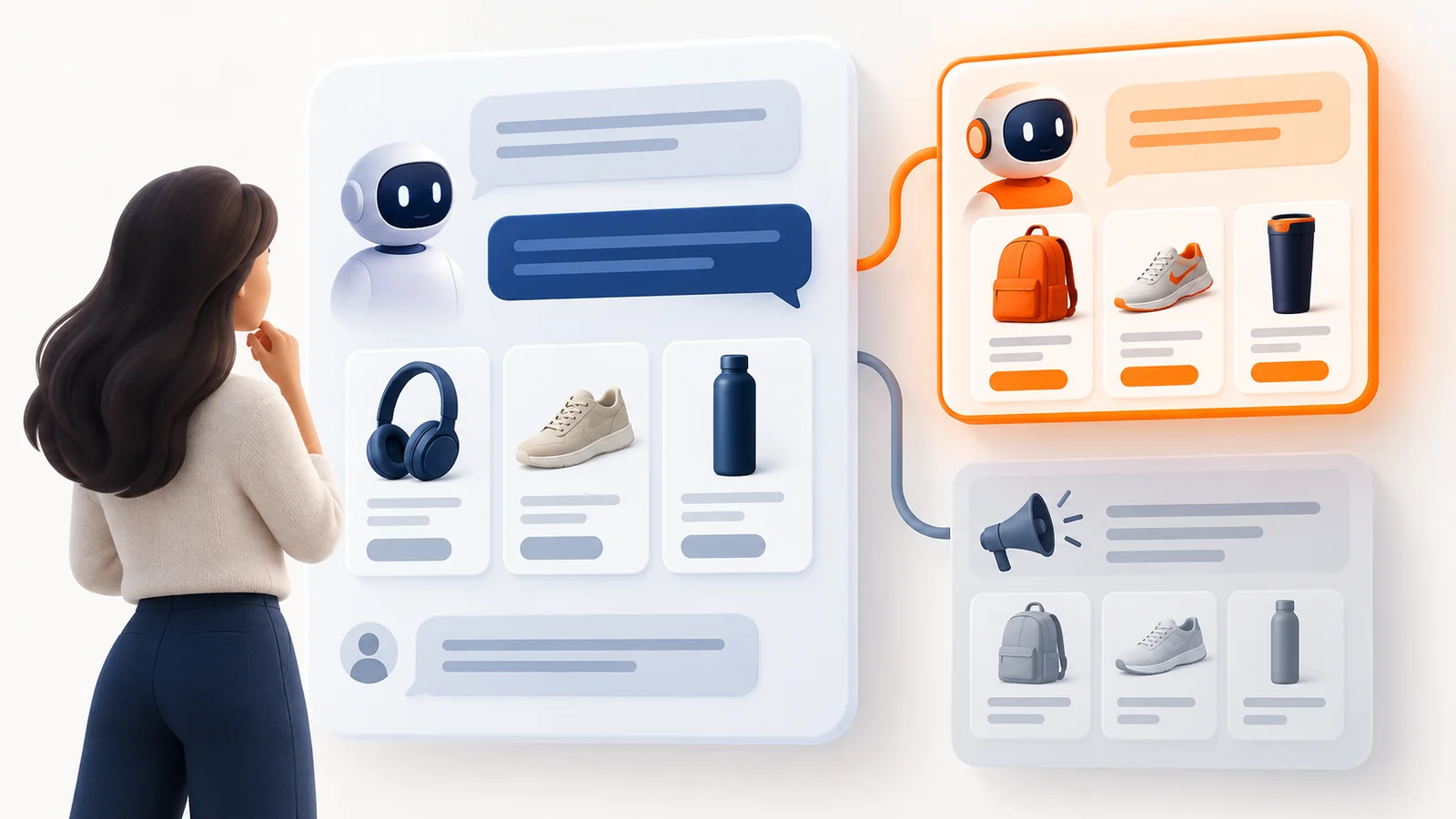
A person sees an ad for a dining table. Before visiting the store, they want to know whether it fits a small room, how many people it seats, and how to care for it. OpenAI’s new Sponsored Agents test is designed for this moment: after clicking an ad, the person can choose to ask a business-sponsored assistant follow-up questions.
OpenAI announced the test on 16 September 2026. It is currently limited to select advertisers in the United States. The announcement also covers new campaign tools and integrations with HubSpot and Shopify. These are advertising products, not a change to organic AI search citations.
What is a Sponsored Agent?
A Sponsored Agent is a clearly labeled, business-sponsored conversation that a user can start after seeing an ad. It is separate from the original ChatGPT conversation and from ChatGPT’s independent answers. According to OpenAI, the user can ask about a product or service and follow a link to the advertiser’s site when ready.
Think of it as a product advisor attached to an advertisement. A useful conversation needs accurate information: dimensions, materials, delivery conditions, returns, and the limits of the product. A vague answer may lead to another question or a lost customer. The announcement does not say that every advertiser can use Sponsored Agents today, nor that paying for an ad changes independent answers.
What else changed for advertisers?
OpenAI says advertisers can use natural-language prompts with an Ads Manager plugin to create, update, and analyze campaigns in ChatGPT. Ads Manager can also suggest ad copy and imagery from a landing page and campaign objective. Advertisers review and edit these suggestions before using them.
An optional text-customization feature can adapt existing headlines and descriptions to the context of a conversation and translate ad copy into the user’s preferred language. A translation still needs a human check for product names, prices, claims, legal wording, and the destination page.
HubSpot is OpenAI’s first CRM integration for ChatGPT Ads. A US-based Shopify merchant can use the ChatGPT Ads app for campaigns and measurement. OpenAI says the Shopify app is planned for other markets where ChatGPT Ads are available from 23 September; that statement is not a launch announcement for Türkiye.
How should a brand prepare?
- Fix the product page first. Make specifications, prices, stock, delivery, and return terms easy to find and consistent with the catalog.
- Write the questions customers actually ask. Include size, compatibility, maintenance, suitability, and limitations. Answer them clearly on the relevant page.
- Check the full journey. If an ad promises one thing but the landing page says another, a more conversational ad will expose that mismatch.
- Measure qualified outcomes. Track visits, useful inquiries, leads, and sales where available. Compare them with campaign spend rather than assuming a conversation is a conversion.
These steps also improve the ordinary buying experience. They are useful even if your business is outside the current test. For organic AI visibility, keep working on accurate, accessible site content separately; an advertising integration is not a guarantee of inclusion in AI answers.
Source: OpenAI, “Reimagining advertising with AI,” 16 September 2026. Product availability and geography above reflect the announcement on that date.